Introductory History for Scavenging Teams
As spoken by Judith Medenberry (2076 - 2146), recorded by apprentice historian Alex Medenberry (2103 - )

Yeah, it must have been nice to live in the Golden Era, before all of this went to shit. Grocery stores. Hospitals. Real, honest, heavy industry. Of course, it wouldn't have been so nice leading right up to it - I think everyone could read the writing on the wall there. Running out of oil, infrastructure still not weaned off it. Hell, electric cars still hadn't taken over, and a good thing too!. Oh, there were a bunch of attempts to push the end back further, and even then it wouldn't really have been gone - just so expensive that it wouldn't be worth running anything on it anymore. But it really seems like the decades leading up to the end were everyone just making their peace, getting ready for everything to change. For the day when they couldn't drive to work because it would cost them more to make the trip than they would get paid, when air travel would cease because you couldn't get the fuel, when the great nations of the world would inevitably go to war over the last little sip. The libraries tell us that it was orderly, not chaotic - When rationing was imposed by the citizenship implants, people grumbled and accepted it because it meant that things would go on as they had a bit longer. When the military set up in the cities with their robots people accepted it - of course they were going to be invaded by China, or Russia, or Canada, or whoever they were looking at suspiciously that day, and the military was there to protect them. Even the mandatory implant program, where they had been optional up until then because of the religious exemption, was allowed - without the implants, how could they have made sure the rationing was being adhered to? All that to push off the final days, the moment of truth, for just a little bit longer.
Imagine their surprise, then, when some laboratory whiz-kid at a biochem company called Basco announces they've solved it. A bacteria, eats plants and poops out diesel fuel. The fuel crisis is solved! Everyone can go right on with their lives, everything's normal. Of course, by that time global warming is starting to catch up to them too, so maybe burning a bunch more fuel isn't the right way to do it, but it works - they get another year on a lucky genetic engineering break. But you've probably noticed that we're not in some sort of utopia, we're scratching out a living while everything slowly falls apart around us. Glad you asked why we're doing that, rather that doing what people do in the old books and movies. See, someone got this bright idea: If there's a bacteria that's making fuel out of plants (though I think they were using sewage at that point), why even bother paying for it at all? Why not start your own bacterial colony, make your own fuel? The records are a bit sketchy on when it started, since it probably started from some guy working in one of the plants skimming a bit off the top and bringing it home, then sharing it with friends. What's pretty clear, though, is that within a year of BascoFuel being introduced commercially, just as the world is starting to pull back from the brink and it looks like they might not have to go to war with Mexico over the dregs of the Texas oil wells, nearly one in four households in America was running an illicit fuel still, and that wasn't much different than the rest of the world.
Now turning plants into fuel in a controlled setting is one thing, but with a bunch of increasingly-ignorant people doing it in their backyard stills and mixing it into their cars to lower their fuel costs? That's a recipe for an accident happening somewhere. Several somewheres, a whole lot of somewheres in fact. And that was when people realized that something that efficiently eats plants and turns them into something that you can't eat is maybe something that you don't want out and wild in the environment. Hope turned to fear, and then panic, as the shortages that everyone had been preparing for arrived suddenly and unexpectedly not in the form of fuel, but of food - driving your car to the grocery store doesn't do you any good when the breadbasket of America has turned into the largest fuel spill the world has ever seen. That's the point when things fall apart, when people start clubbing their neighbors for the last bag of rice or the last can of beans. Food riots flared up just as all the invasion contingencies were activated since nobody knew if this was a prelude to an invasion, the panicked people got tagged as possible enemy infiltrators, and that emptied the cities out right quick. There were a couple of border skirmishes, including what we think was an attempt by the Canadians to push down and take Manhattan, but there aren't great records there - I don't even know how many people died to the wars, to the military trying to keep the peace, or to quiet starvation as the mechanics that kept everyone fed fell over and refused to get up again. I've heard there were great fires on the plains to the west when the fuel-soaked ground ignited, streaked the skies with dirty black smoke for months.
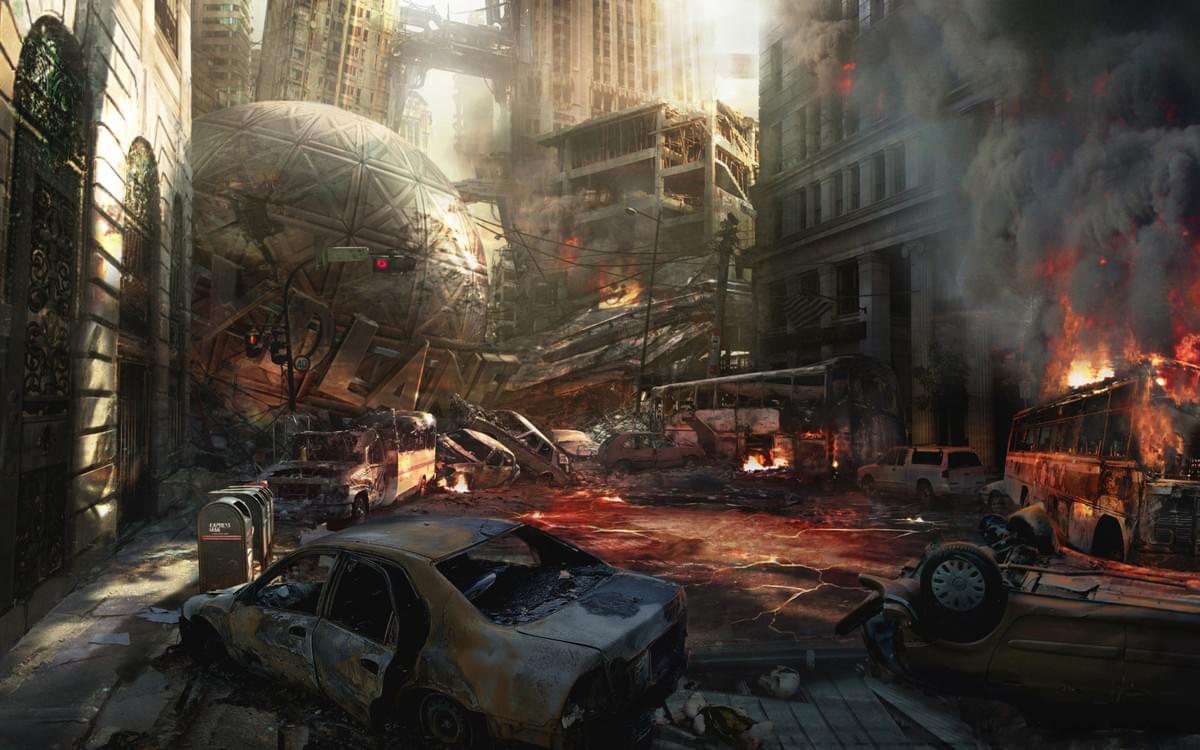
But, luckily for you, it turns out we didn't all die. Some lucky few of us managed not to be in the cities, managed to find or had already built a cache of food and held on to it, found somewhere to shelter until we could come out and safely start growing food and hunting again. I wasn't born yet then, and I'll be honest with you that our records from just afterward are kind of shit. Somehow, try to not die of starvation, or die of disease, or die of bullet-induced lead poisoning, really prevented people from writing things down well. We know there was a second dust bowl, presumably all the soil that no longer had roots to hold it down blowing off and spelling doom for everyone who thought they were going to be able to farm it. We know that the convenience of fuel outweighed the possibility of a second outbreak, and we (and everyone else and their dog, apparently) got our very own home-built BascoFuel fermentation tub that turns all our waste into fuel for the motor pool and has only broken and flooded the basement with all of our sewage and eaten all the crops and forced us onto the backup rations three or four times (it's worth it, trust me. The six months after that happens, when you're rationing fuel to the cars to go out and scavenge more food to make it until the first potatoes are ready to harvest, are the absolute worst after getting something from unboiled water and having all your fluids try to depart from both ends). We try to keep our usage of that down, though, which is why we've got the water wheel in the river and the solar panels on the roof - the fuel is only for the vehicles and emergencies. That, and the fields we've managed to replant and hunting in the forest (apparently the bacteria can't eat trees - good thing, too) keeps us at least in the first two level of Maslow's needs. There's a good 30 of us now [Ed. Note: 50 and climbing!], so that lets us have everything we need to be a small, abnormally self-sufficient little farming village with walls all around it and a couple of guards around. We've got specialization of labor, sustainable farming, and pickup trucks made by cobbling together parts of three other pickup trucks and a bunch of spikes for good measure. People get born here, people live their lives, fall in love, make more people get born, and die of entirely natural causes. All to push off the final day just a little bit longer.
So that's where you come in, now that you've had your history lesson of the crash a hundred and twenty years ago and our climb out of "shivering through the winter while starving to death". We've got the basics, but there's stuff out there that we can't make here and need to find. Water purification tablets. Replacement bits for the mill and the lathe. Materials to make more ammunition to replace the stuff you always fire off willy-nilly. There's stuff that brings us closer to where we used to be, like knowledge and books, though we've had a hundred years to get the obvious stuff so only bother if it's good or racy. There's the stuff that we don't need per se, but really makes life more pleasant when it's there - toys for the children, new kinds of plants to cultivate, preserved clothing. There's tasks that happen outside the village that need to be done, making sure none of the other villages is getting any ideas about starting to poach our forest or dumping crap in our river. Find out if any new bandits or gangs are moving through the area so we can take precautions. Watching for the robot supply drops to see if we can steal any of them, get the really good stuff (where do they make it, even?). So that's what you've volunteered for, since you're young and think you're invincible and think that roaring around the western badlands having adventures is way better than apprenticing to the machinist or learning to farm. That's fine, I was young too, but here are some tips, free of charge, to help you live to the age when maybe something that involves more staying in the village and less finding yourself huddled in some collapsed building freezing your ass off because it's nighttime in December and you lost your supplies swimming across the Hudson to escape from bandits.
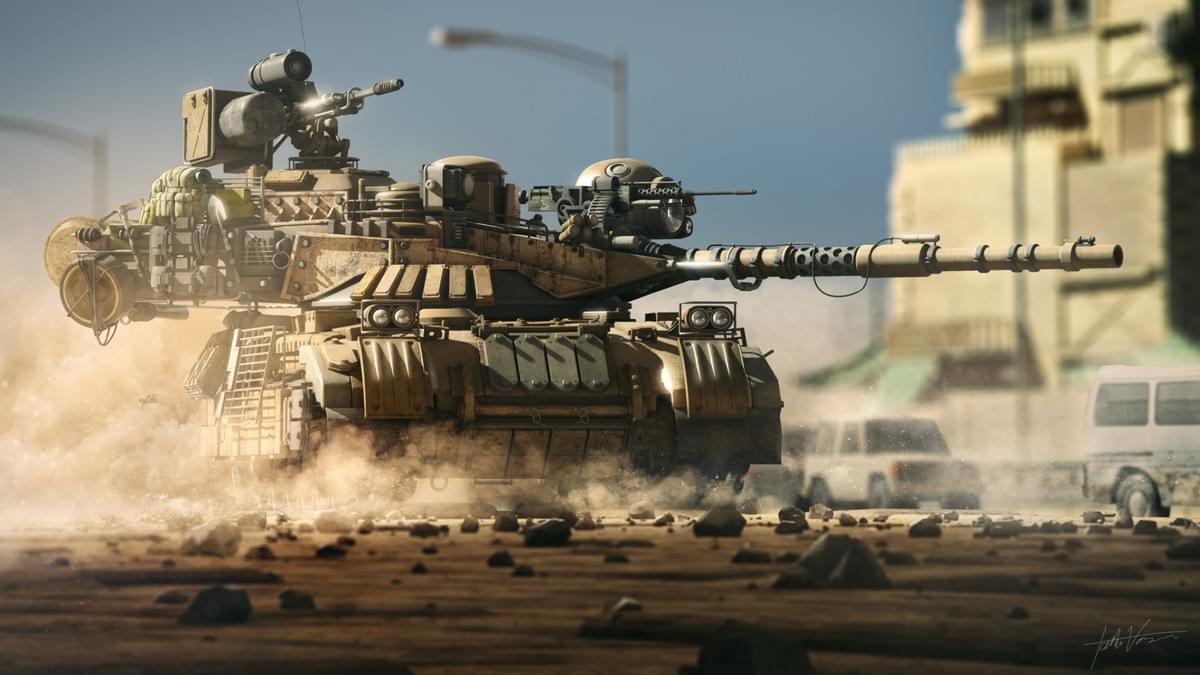
Number one, boldface, never forget this ever: 30-odd miles south-west is Albany. Patrolling Albany are the superheavy tanks Rushmore, Shasta, Algonquin, and Gannett. Do not go near Albany. Do not attempt to approach any of the tanks. Do not, under any circumstances, come back if you have attracted the attention of the tanks. We think they are fully autonomous at this point, though the records say they needed a human crew. Regardless, without citizenship implants and a central authority they con confirm with (and they will check) they'll tag you as an enemy combatant and wipe you off the face of the earth. Got to see that real clearly around 15 years ago when the Jenkins clan broke into somewhere and came out with a bunch of antitank missiles. You can see the scorches on Shasta where one of them almost got through the active defenses, but there isn't anything left of the Jenkins clan's bunker other than a smoking hole in the ground.
Number two, italicized: Do not engage the robots. As far as our ham radio operator can tell, they are operating under some contingency that says they should be distributing supplies to help citizens who were caught outside the city when the war started (yeah, I know, we're not at war but they don't know that). Finding and taking those supplies: Good. Trying to fight the armored robot with the machine gun to take their stuff: Bad. Don't get impatient, kids. It gets you dead.
Number three: Stay aware. The storms have been getting better over time, but you still don't want to be outside in a summer thunderstorm or a winter snowstorm (or another hurricane, like that one a few years back). You don't want some crazed ganger to sneak up behind you, or lay an ambush. We get those moving through every few months, must be something out there making them with how often they show up.
Number four: Communicate. We've got the radios set up for a reason, you can talk to us any time you want during the day as long as you aren't too far away. We're pretty friendly with most of the other villages around here, so you can talk to them and relay a message to us if you need to, but if you're doing that remember the codes. Let us know if you see anything suspicious before you go to check it out. If you break down in the badlands, let us know and we'll send someone out. You're young and independent, but that doesn't mean you should ignore the safety net we've built for you.
Other than that, you're on your own. Head out, scavenge things or do stuff that needs doing, come back when you need food. Remember that ammunition is scarce, so try not to waste it. Good luck, and may you live to regret your decision. I know I do.
Scavenging from the Experts
As spoken by Wilber Whatley (2094 - ), recorded by Historian Alex Medenberry (2103 - )
Well, Judith always said that I should have something recorded for posterity, and now that she's passed on it seems like the least I can do is actually sit down and get it done. Let's see, I had her instructions written down somewhere, let's see, hmm, yes, for new scavengers, yes [inaudible mumbling], alright.
So I'm supposed to introduce things like you're new members of the scavenging team. Supposed to pass on all of the tricks of the trade, give the new blood some idea of where to start out. Not sure why we would even send out a whole batch of rookies, but you never know. Something about making sure that knowledge didn't get lost between the generations. Planning ahead farther ahead than I ever did.
We may as well start with right where we are - central old New York, about 50 miles due west of Albany. That puts us right smack in the middle of the Canadian Invasion, part of the wars that broke out in the aftermath of the food collapse. I don't think anyone knows what they were going for, but it's pretty clear that they and the United States army got bogged down pretty heavily right around here, probably had trouble pushing past the tanks around Albany. Maybe that's even why the tanks were stationed there. Anyway. It seems like they got bogged down and there was a nice couple years of terrible drawn-out warfare before they realized everyone was going to just starve to death. So what we've got here is the foothills some really rather impressive mountains, covered in all the forests that survived the food collapse because trees make terrible fuel, absolutely infested with bunkers left over from one side or the other. Now, before you go running off with visions of ancient weaponry and such, let me warn you - we've emptied out the ones close by and the obvious ones farther off, and the ones that are left aren't getting any younger. That means it's less likely any fancy stuff in them is still in working order, and more likely that you'll find something like an artillery shell that's destabilized and ready to go off at the slightest touch. Not to mention that they aren't conveniently located next to roads or anything, so finding one means hiding the truck somewhere and spending a few days camping. Not that it's not worth it sometimes, just that it's not the easy pickings it once was.
Up next is the cities. Well, towns. Bigger than us, anyway. After a hundred years you're not likely to find much that the average scavenger wants, not without looking real closely. But we're not the average scavengers, are we? We're looking for the building blocks of civilization, not another dozen rounds of ammunition. The primer's probably all gone to shit anyway. We're looking for the sorts of things that will let us grow further and faster - new seeds from garden or farming supply stores, stuff to keep the old dam running, salvageable vehicle parts. Again, all the nearby stuff we've picked over pretty good, but you can go farther afield if you want and let me tell you: before they all starved to death, the people of the old world made a lot of crap.
That brings me to the next point. As scavengers you're going to be the public face of our settlement, and we don't have too many treaties with those around us. We've got the Amish to the west twenty or so miles, and we're still friendly with them after some good trading when we were just getting started. You can recognize their stuff by the crosses they put on it, don't touch it. There are the caravans to the fishers, you follow the rules in the caravan and don't make trouble. But apart from that, you're following your conscience and doing what you can. You want to negotiate a trade you go ahead and do that - we got a lot of stuff that others out there need really badly, and that means that we can drive a hard bargain. Hell, we're always looking for new people - if they seem trustworthy enough, and have decent skills and manners, you could even bring them back with you. And while I'm not going to encourage banditry - it's a rotten business that will just get you killed - there's no reason not to let banditry happen to some other people and then liberate the proceeds from the bandits. I'm just saying, is all.
Lastly, if you head south toward Albany, you can start picking up supply caches. The advantage there is that they are fresh, laid down by the robots for citizens they think are still out there. That means new clothing, fresh medication, sometimes even newly-made ammunition. The disadvantage, of course, is that if you actually meet a robot it won't identify you as a citizen and then you'll get yourself killed. Definitely the highest-risk place we can scavenge, but there's some stuff there that you just can't get anywhere else. Oh, and don't get within line-of-sight to the Albany tanks, since they can and will blow you away if they can see you. If you're going far south, be real careful about that.
So you're out in what I'll assume for posterity is still the same patched-up pickup truck I use, and you find something big. Maybe it's a nice chunk of machinery, or a transformer that hasn't broken down too much. Maybe it's even the press-former we need to fix the blades on turbine Charlie - god knows we've been looking for that long enough that I'm sure you'll still be looking when you hear this. So anyway, you've got this thing, and it's too big. Doesn't fit in the bed, even when four of you get out to walk alongside. Well, that's when you hide it real good, slap our emblem on it so if someone finds it that doesn't want to piss us off they'll leave it alone, and come on back to the settlement all quick-like and we'll fire up the Truck and hook whatever we need to up to it to get it back. Thing burns fuel like it wasn't even built in an era where they were counting the days until there wasn't any more gas, but it carries 10 tons and pulls quite a bit more - whatever you've found, that will get it home.
So yeah, I guess that's about it - head out, find stuff and get it to safety, then either bring it back yourselves or call in the heavy stuff if you've got something particularly large. Oh yeah, and don't get yourselves killed doing something stupid - you and your gear are almost certainly worth more than whatever you're trying to salvage, it's just not worth it.
